 Back to planetforlife homepage
About Planetforlife
Mission Statement

 All our science, measured against
reality, is primitive and childlike--
All our science, measured against
reality, is primitive and childlike--
and yet it is the most precious thing we have.
Albert Einstein (1879-1955)
Planetforlife is written in the spirit of scientific inquiry. The goal of science is to discover the truth, even if the truth is counter-intuitive or unpleasant. Science is not separate from the everyday world. Science is asking questions and testing hypotheses. A successful farmer or hunter living 10,000 years ago did this. Children know they need to understand the world so they form hypotheses and they test them. That is why they ask endless questions as any parent knows.
Planetforlife predictions are extraordinary and for that reason they should be examined with great skepticism. Please consider these predictions with the frame of mind of a scientist. A good scientist has an unquenchable desire to know and--equally important--a strong desire not to be fooled. Quantities that can be objectively measured will be used to support arguments that appeal to logic. These arguments should be persuasive regardless of the reader's political or religious beliefs. Arguments and the supporting evidence are presented together whenever possible. Emotional polemics and histrionics are avoided.
We humans, because of our numbers and our technology, are in control of this spaceship we call Earth. We must realize that the Earth does not come with an operating manual and that the Earth's natural resources, though generous, are finite. There seems to be little public awareness of the oil and gas depletion problem although the facts are readily available.
Personal
My name is Jack Kisslinger and I live in Madison, Wisconsin. Planetforlife is a personal effort, inspired by my belief that the coming world energy crisis needs immediate and widespread attention. My interest in the oil depletion problem started early in 2003 when I realized how different the world will be without abundant and cheap fossil fuel.
I am optimistic by nature although this website warns of several dire crises. My wife will attest--I am not easily alarmed although this website is intended to raise the alarm. (The Y2K "crisis" did not alarm me in the slightest.) I would characterize myself as a hardheaded realist. I enjoy tennis, backpacking, and playing the piano.
Niether politics nor religion belong here. But it is hard to write anything substantial that does not contain hints of the author's religion and politics. For this I apologize.
 I have a strong background in science and
technology. I worked as an engineer in industry for more than 20 years. Since 1986, I
have been a self-employed consultant, specializing in systems with "embedded"
computers. Here are some facts about my background:
I have a strong background in science and
technology. I worked as an engineer in industry for more than 20 years. Since 1986, I
have been a self-employed consultant, specializing in systems with "embedded"
computers. Here are some facts about my background:
- Degree in physics from University of Wisconsin-Madison.
- Chief architect of a series of computers with applications in analytical chemistry.
- Chief architect of a special purpose computer that performed Fourier analysis.
- Chief architect of a portable computer based sleep analysis system.
- Designed a portable device for muscle rehabilitation.
- Designed a data system for a Fourier transform infrared spectrometer.
- Designed a heart rate monitor for cardiac rehabilitation.
- Evaluated a nanotechnology infrared detector at Stanford University.
- Designed a high voltage controller for an X-ray microscope.
I strongly believe that scientific literacy is a good thing. The beginning of my scientific literacy began when I read 1 2 3 Infinity by George Gamow as a teenager. It must be good because it is still in print. Many scientists say 1 2 3 Infinity was the spark that launched their scientific careers. Yet it is short and whimsical and suitable for older children. I also recommend Physics for Poets by Robert H. March, Asimov on Physics or Asimov on Chemistry by Issac Asimov. Carl Sagan has written many books and the Cosmos television program. A major motion picture, Contact, is based on one of his books. Anything written by Carl can be recommended.
 Comments,
suggestions and encouragement are welcome. I will try to reply to all questions. I
would very much like to know about errors in facts, errors in logic, and broken links.
Click the icon or e-mail me at:
Comments,
suggestions and encouragement are welcome. I will try to reply to all questions. I
would very much like to know about errors in facts, errors in logic, and broken links.
Click the icon or e-mail me at:
jack@planetforlife.com
Floobydust
(Floobydust is a word of uncertain origin that means "doesn't fit anywhere else.")
 Liberia, Myanmar, and the United States are the only countries not using the
metric system. Planetforlife believes that clear thinking is easier in the
metric system. However, oil is often measured in barrels and natural gas is often
measured in BTUs (British Thermal Units), units honored by tradition. The unit most
likely to be understood will be used.
Liberia, Myanmar, and the United States are the only countries not using the
metric system. Planetforlife believes that clear thinking is easier in the
metric system. However, oil is often measured in barrels and natural gas is often
measured in BTUs (British Thermal Units), units honored by tradition. The unit most
likely to be understood will be used.
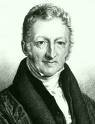 Thomas Malthus was right. There are limits to human
population growth. Malthus did not appreciate the effect of fossil fuel on human
population growth and so his timing was a little off. Human population grows
exponentially because the growth rate depends on the number of people. Food production
does not grow exponentially. Something will limit the amount of food that can be
produced. It might be a dearth of agricultural land, water, sunlight or fossil fuel; it
is hard to know which. There is no plausible way to escape the consequences of
exponential growth. We humans must practice birth control or death control will be
forced upon us. Learn more about Malthus at
Thomas Malthus was right. There are limits to human
population growth. Malthus did not appreciate the effect of fossil fuel on human
population growth and so his timing was a little off. Human population grows
exponentially because the growth rate depends on the number of people. Food production
does not grow exponentially. Something will limit the amount of food that can be
produced. It might be a dearth of agricultural land, water, sunlight or fossil fuel; it
is hard to know which. There is no plausible way to escape the consequences of
exponential growth. We humans must practice birth control or death control will be
forced upon us. Learn more about Malthus at
http://www.ucmp.berkeley.edu/history/malthus.html
 The reindeer on St. Matthew Island
provide a truly terrifying example of what could happen if we humans do not learn how
to control our numbers to match our resources.
The reindeer on St. Matthew Island
provide a truly terrifying example of what could happen if we humans do not learn how
to control our numbers to match our resources.
http://www.gi.alaska.edu/ScienceForum/ASF16/1672.html
